Short Answer: No — cracked tires cannot be repaired. A patch or plug fixes a puncture, which is a hole through the rubber. Cracking is the rubber itself breaking down, and nothing reverses that. The real question is whether the cracking is shallow enough to monitor or deep enough to replace now. This guide is for Ontario drivers — particularly anyone pulling winter tires out of storage this month and finding marks or splits they did not leave with last spring. Knowing the difference matters because a badly cracked tire can fail without warning.
Key Takeaways
- Cracked tires cannot be patched, plugged, or sealed — the rubber compound has degraded
- Small, shallow surface cracks may allow continued use with monitoring; deep cracks, visible cords, or bulges mean replace now
- Sidewall cracks are more serious than tread-groove cracks — the sidewall has no repairable zone
- The DOT code on the sidewall shows the tire’s manufacturing date — use it to track age
- Underinflation, UV exposure, ozone, heat, and long periods sitting unused are the main causes of cracking in Ontario
- Ontario’s on-road tread minimum is 1.5mm; the Safety Standards Certificate minimum is 2mm — these are two different thresholds
October is when cracked tires turn up. Drivers pull winter tires out of storage, set them in the light, and see marks or splits that were not obvious last spring. Cracking in stored tires is common and not always cause for immediate replacement — but some of it is, and the difference is worth knowing before you drive on them.
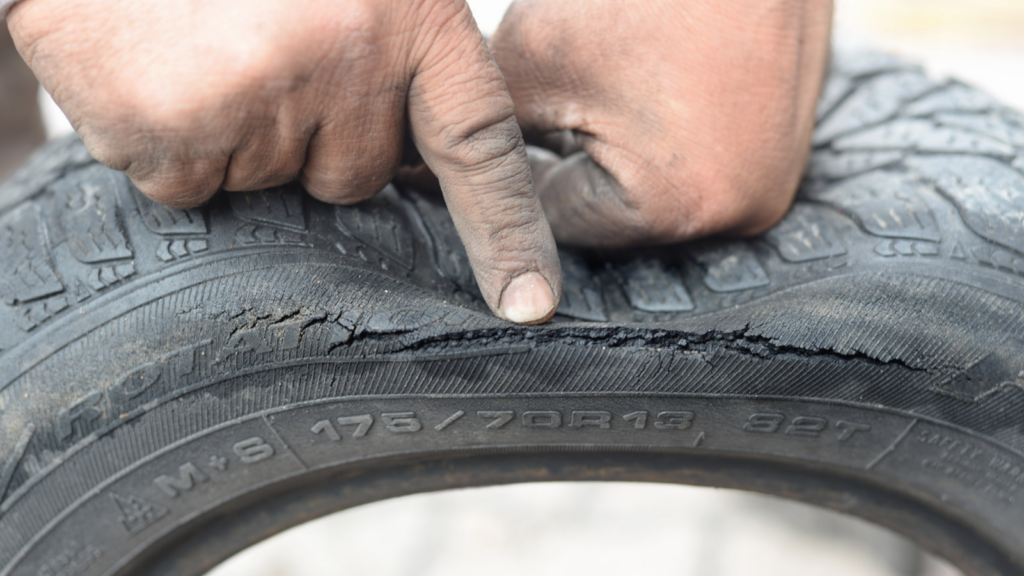
Can You Fix Cracked Tires?
No repair technique fixes rubber cracking.
A patch or plug bonds to intact rubber and seals around a puncture. Cracking is not a hole — it is the rubber polymers breaking down as the material ages, dries out, and loses elasticity. There is no patch for that.
Tire dressings and conditioners can reduce the appearance of surface cracking and may slow further UV degradation. They do not restore the internal structure of the rubber.
If a tire is cracked, the only options are to monitor it or replace it. There is no repair in between.
Are Cracked Tires Dangerous?
It depends on the depth and location of the cracks.
Small, shallow cracks — fine surface marks in the tread grooves or on the outer sidewall — are a sign of aging but do not necessarily mean the tire is about to fail. They are worth checking before a long trip.
Deep cracks are a different matter. When cracks are wide enough to see into, when they expose the fabric cords beneath the rubber surface, or when they appear alongside a bulge anywhere on the tire, the structural integrity is compromised.
Damaged tires in that condition should not stay on the vehicle.
Location also matters. Cracks that encircle the sidewall, cluster near the bead, or run across it in multiple directions indicate more serious degradation than isolated surface marks.
Tire Sidewall Cracks vs Cracks Between the Treads
Cracks on the Sidewall
Sidewall cracks are the more serious finding.
The sidewall flexes on every rotation under the vehicle’s load and the friction of cornering and braking. That movement puts stress on any weak point in the rubber.
A cracked sidewall cannot be repaired. Unlike the tread area, where a puncture in a defined centre zone can sometimes be fixed from the inside, the sidewall has no repairable zone.
Deep sidewall cracks, cracks alongside a bulge, or cracks encircling the sidewall all require immediate replacement.
Cracks Between the Treads
Cracking in the tread grooves — between the tread blocks, not on the outer sidewall — is generally lower risk than sidewall cracking. The tread area is thicker, and shallow groove cracks often reflect age or UV exposure rather than structural failure.
Check tread depth at the same time. Ontario’s on-road legal minimum is 1.5mm (R.R.O. 1990, Reg. 625); the Safety Standards Certificate minimum is 2mm (MTO Inspection Standard, Section 9) — a tire at 1.7mm is road-legal but fails a safety inspection. See how to measure tire tread depth.
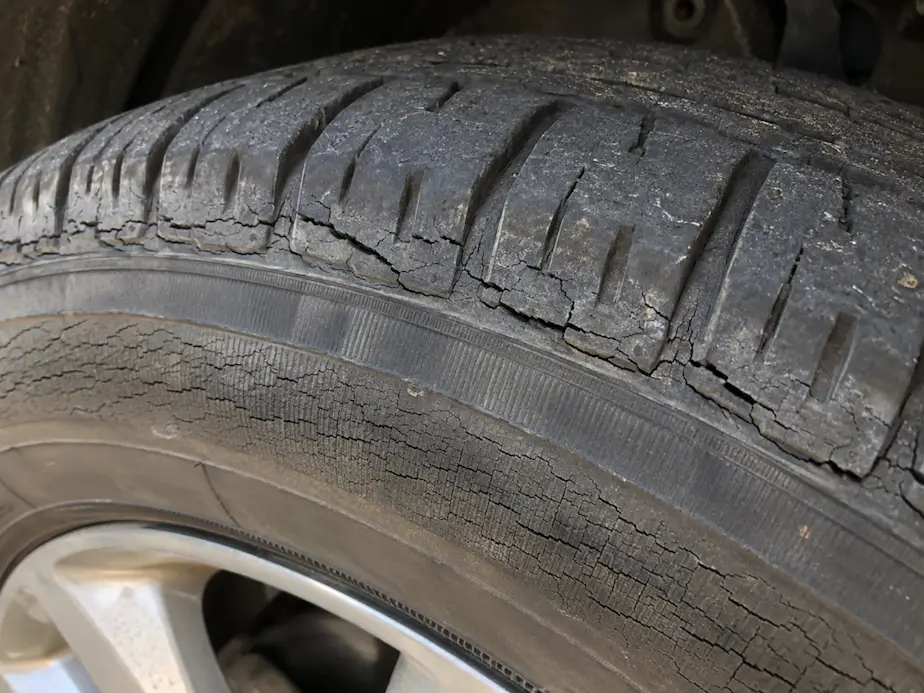
Tire Sidewall Cracking: When to Replace
Replace immediately if any of the following are present:
- Cords or fabric are visible through the crack
- A bulge appears anywhere on the sidewall or tread
- Cracks encircle the sidewall or run to the bead where the tire seats on the rim
- The crack is wide enough to see clearly into
For shallow surface cracking without any of those signs, have the tire inspected by a technician who can flex the sidewall and examine it in good light.
Reading the DOT code. Every tire carries a DOT code on the sidewall. The last four digits give the week and year of manufacture — for example, 1924 means the 19th week of 2024. Most tire manufacturers publish a recommended service life. Check the manufacturer’s published guidance for your specific tire before relying on any general age figure.
Why Tires Crack in Ontario
Several things accelerate rubber degradation in Ontario.
UV rays and ozone. UV rays and ozone are the most common cause of rubber polymer breakdown. Tires stored outdoors or parked in direct sunlight degrade faster.
Heat. Storing tires near a furnace, water heater, or electric motor speeds up aging. Summer parking on hot asphalt and impacts from potholes add heat and stress during the season.
Long periods unused. A vehicle parked for months, or tires stored in poor conditions, can develop cracking from prolonged inactivity as the rubber grows brittle.
Incorrect tire pressure. Running a tire at low tire pressure causes excessive sidewall flex, generates internal heat, and accelerates surface cracking. Check pressure before storing and again before mounting. For storage guidance, see where to store off-season tires in the GTA.
Check Your Winter Tires Before the Changeover
Before mounting winter tires this October, set each tire on a flat surface in good light and work through these checks:
Cracks. Run your hand along the full sidewall and into the tread grooves. Feel for raised edges, separation, and visible marks.
Tread depth. Measure with a gauge at three points around the circumference. Keep the 1.5mm on-road minimum and the 2mm Safety Standards Certificate minimum as two separate thresholds. See the tread depth guide.
Bulges. Any deformation on the sidewall or tread surface means the tire is done, regardless of tread depth.
Valve stems. Cracked or corroded stems cause slow leaks — replace them when there is any doubt.
TPMS sensors. Confirm sensors are seated and registering before the swap. A faulty sensor can mask a slow leak.
If any check raises a concern, have the tire inspected before mounting. Fix My Tires handles mobile tire change at your location if you need a replacement set mounted on-site.
Frequently Asked Questions
How much do tire repairs typically cost?
A tread puncture repair runs $20–$45 at an Ontario shop and $75–$120 for a mobile service in the GTA — see flat tire repair cost in Ontario for the full breakdown. Cracking is not a repair situation; a cracked tire requires replacement.
What is the average cost to repair a tire?
The average tread puncture repair in Ontario costs $20–$45 at a fixed shop — details in the flat tire repair cost post. Cracking cannot be repaired; replacement is the only option.
Are small cracks in tires safe?
Small, shallow surface cracks are a sign of aging but do not automatically make the tire unsafe. Have them inspected. Deep cracks, exposed cords, or a bulge alongside cracking mean do not drive on the tire.
Is tire cracking illegal in Ontario?
A tire with cracking that exposes cords or compromises the structural carcass is not roadworthy and fails a Safety Standards Certificate inspection. Shallow surface cracking is not automatically illegal but should be monitored.
Book a Mobile Tire Change With Fix My Tires
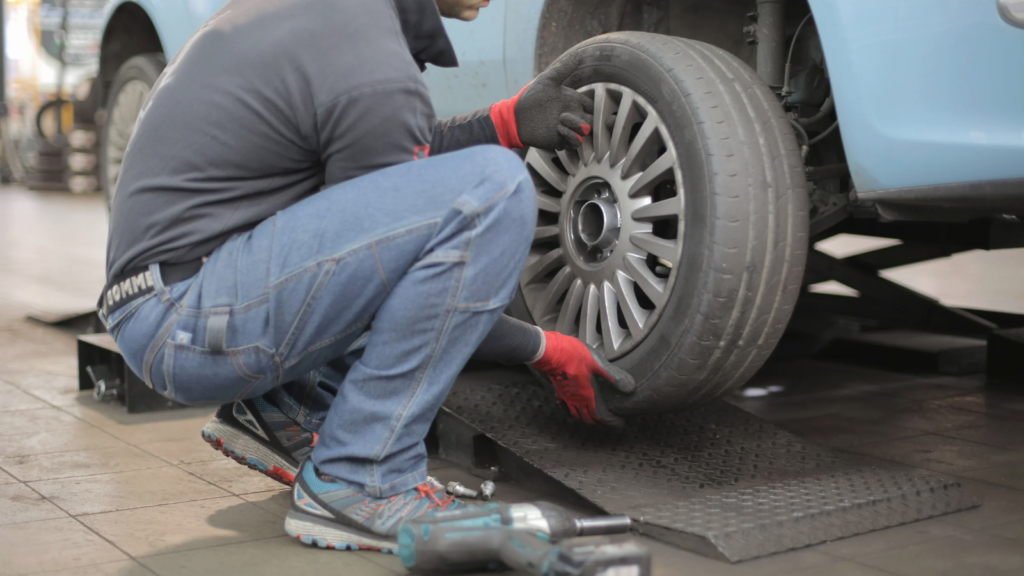
If your winter tires show deep cracks, exposed cords, or any bulging, they need to come off the vehicle before you drive on them. Fix My Tires handles mobile tire change across Mississauga, Toronto, Brampton, Oshawa, and Whitby. A technician comes to your driveway to remove the old set, inspect, and install replacements on-site.
Call (289) 401-8473 to book.