Short Answer: A tire that keeps losing air without going flat usually has one of three problems: a slow puncture in the tread, a leaking valve stem, or a broken bead seal where the tire meets the rim. This guide is for GTA drivers in Mississauga, Toronto, and Brampton who keep topping up the same tire and want to know what is causing it and whether it can be fixed without a replacement.
Key Takeaways
- Tires naturally lose 1–2 PSI per month through the rubber — a slow drop across all four is normal
- A single tire losing air consistently points to a puncture, valve stem fault, or bead leak
- A 6°C temperature drop lowers pressure by approximately 1 PSI — not the same as a mechanical leak
- Soapy water applied to the valve, tread, and rim edge reveals a leak as bubbles
- A valve stem core costs under $4; tightening a loose one often stops the loss
- Tread punctures under 6mm in the centre tread area can typically be repaired
A tire that loses air overnight is easy to notice. One that drops 3 PSI over two weeks is easy to dismiss — until it is flat on a cold morning. Slow leaks are the more common problem and the one left unfixed longest.

What Causes a Tire to Lose Air Slowly?
Natural Air Permeation
All tires lose 1–2 PSI per month through the rubber — normal, not a sign of damage. If one tire is losing air faster than the rest, something mechanical is causing it.
Punctures in the Tread Area
A nail, screw, or piece of road debris lodged in the tread is the most common cause of a slow leak. The object plugs its own hole while it stays in the tire, making the puncture easy to miss on a visual check. Tread punctures under approximately 6mm in the centre tread area can typically be repaired with a patch-plug.
Leaking Valve Stem
The valve stem is the small fitting you press to add or release air. Valve stems develop leaks due to age and weather exposure — the rubber degrades, and the metal core inside can work loose. A leaking valve stem bleeds air steadily and is often mistaken for a slow puncture.
A loose valve core costs under $4; tightening it with a valve tool takes under a minute. If the rubber stem itself is cracked, the whole stem needs replacing — a short job at a tire shop when the tire is off the rim.
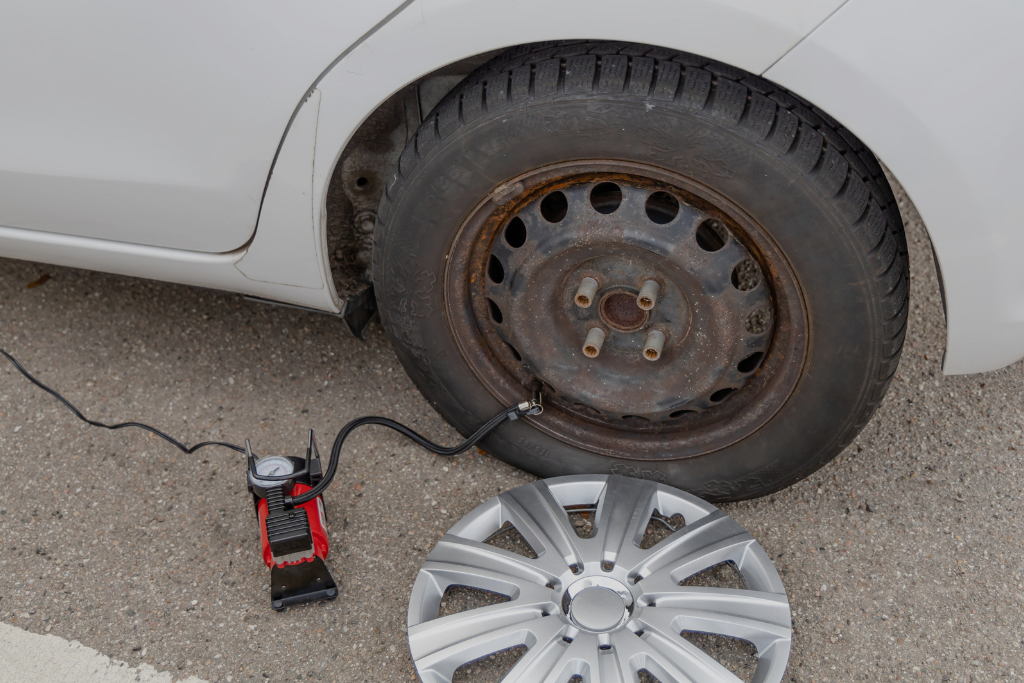
Bead Leaks
The bead is where the tire seals against the wheel rim. Dirt, corrosion, or minor rim damage at that junction breaks the seal and allows air to escape slowly. A shop can clean and reseat the bead without replacing the tire.
Sidewall Damage
A crack, impact bulge, or object in the sidewall causes slow air loss with no repair option. The sidewall flexes under load on every rotation; a patch cannot hold there. Sidewall damage means replacement. If you are also seeing cracks in the tread grooves or sidewall rubber, see can cracked tires be repaired to assess whether that is a separate problem.
Temperature Changes
A 6°C drop in ambient temperature lowers tire pressure by approximately 1 PSI. A tire that reads correctly in October may trigger the TPMS warning on a cold November morning without any leak present. Inflate to the doorjamb spec and check again after a few days — if it holds, temperature was the cause. For more on why tire pressure drops every Ontario winter, see that dedicated guide.
How to Find a Slow Leak
Apply dish soap mixed with water to the valve stem, around the rim edge, and across the tread. Bubbles show where air is escaping. For a buried puncture, run your hand across the tread to feel for an embedded object.
If the soapy water test shows nothing and the tire is still losing air, a tire shop can submerge it in a water tank to find a hairline bead leak or tiny puncture invisible under normal inspection.
When to Call a Mobile Tire Service
If the same tire keeps losing pressure week after week, you cannot find the source at home, or there is visible damage — a bulge, a crack, or a nail in the tread — a mobile tire service comes to where the vehicle is parked. Fix My Tires provides flat tire repair in Mississauga and across the GTA, so you do not need to drive a compromised tire to a shop.
Do not drive on a significantly underinflated tire. Running a tire flat generates heat that breaks down the internal structure — a puncture that would have cost $20–$45 to repair becomes a replacement once the carcass is damaged. See flat tire repair cost in Ontario for a full breakdown.
Frequently Asked Questions
What causes a tire to keep losing air slowly?
The most common causes are a tread puncture, a leaking valve stem, and a bead leak at the rim. Natural permeation accounts for 1–2 PSI per month across all four tires — faster loss in a single tire points to one of these three.
How do I know if I have a slow leak or just cold weather?
Inflate the tire and check it again after a few days at the same temperature. A temperature drop affects all four tires roughly equally; a slow leak shows up in one tire specifically. If the same tire is always the low one, you have a leak.
Can a leaking valve stem be fixed without replacing the tire?
Often yes. A loose valve core costs under $4 to replace and tightens in under a minute. If the rubber stem itself is cracked, it needs replacing when the tire is off the rim — a low-cost job at any tire shop.
Why is my tire losing air overnight?
A tire that goes noticeably flat overnight has a faster leak than the 1–2 PSI lost per month through normal permeation. The most likely causes are a puncture, a faulty valve stem, or a bead leak at the rim. Apply soapy water to the valve and rim edge to locate the source. Do not drive on a significantly deflated tire — call for mobile tire service or roadside assistance.
Why does my tire keep losing air after I fill it?
If pressure drops back quickly after inflating, the most likely cause is a valve stem problem — a loose core that won’t seat, or a cracked rubber stem that cannot hold pressure. Apply soapy water around the valve while adding air and watch for bubbles. A loose core takes under a minute to tighten; a cracked stem needs replacing when the tire is off the rim.
Is a slow leak in a tire dangerous?
Yes, if left unchecked. Underinflated tires handle and brake worse than correctly inflated ones, and a tire run significantly below its target pressure can fail without warning. Check the affected tire before each drive until it is repaired.
How much does fixing a slow leak at a tire shop in Ontario cost?
A valve stem core replacement is typically under $10 in parts and labour. A standard tread patch-plug runs $20–$45 at a shop and $75–$120 for mobile service in the GTA. A bead reseal falls in a similar range. See flat tire repair cost in Ontario for the full breakdown.
Book Mobile Tire Repair With Fix My Tires
If a tire keeps losing air and you need it found and fixed without driving to a shop, Fix My Tires handles mobile tire service across Mississauga, Toronto, Brampton, Oshawa, and Whitby.
Call (289) 401-8473 to book.