Ontario drivers buying or selling a vehicle, preparing for a safety inspection, or heading into winter need two tire tread depth numbers: 1.5mm on the road (Reg. 625) and 2mm for a Safety Standards Certificate (MTO Inspection Standard, Section 9). Mixing them up means a failed inspection or tires that cannot stop safely. Fix My Tires covers both.
Key Takeaways
- On-road legal minimum: 1.5mm — R.R.O. 1990, Reg. 625
- Safety Standards Certificate minimum: 2mm — MTO Passenger/Light-Duty Vehicle Inspection Standard, Section 9
- When tread wear indicator bars are flush with the tread surface, you are already below the 2mm certificate threshold
- Canadian pennies were retired in February 2013 — a tread depth gauge is the correct tool
Ontario’s legal framework for tire tread gives drivers two different benchmarks. The on-road minimum is 1.5mm under R.R.O. 1990, Reg. 625. The Safety Standards Certificate threshold is 2mm per Section 9 of the MTO Passenger/Light-Duty Vehicle Inspection Standard. A tire at 1.8mm passes the road test but fails the safety inspection.
Two Standards, Two Situations
The 1.5mm road minimum applies every time you drive. The 2mm certificate standard applies when a vehicle needs a Safety Standards Certificate — typically for private resale or registration of a rebuilt vehicle. Knowing both numbers prevents two different problems.
Ontario’s On-Road Legal Minimum: 1.5mm
R.R.O. 1990, Reg. 625 sets the on-road minimum at 1.5mm for passenger vehicles with a gross vehicle weight rating of 4,500 kg or less. A tire is in violation when tread depth falls below that line or when the tread wear indicators make contact with the road surface.
If your tires are close to that threshold, a mobile tire change through Fix My Tires replaces them at your location without a shop visit.
One important note: most manufacturers set tread wear indicator bars at approximately 1.6mm. Ontario’s 1.5mm road minimum falls just below that. A tire with visible wear bars is technically roadworthy under Reg. 625 — but it cannot pass a safety certificate inspection.
Minimum Tread Depth to Pass an Ontario Safety Inspection: 2mm
Section 9 of the MTO Passenger/Light-Duty Vehicle Inspection Standard requires at least 2mm of tread depth in every major tread groove. A single tire below 2mm fails the entire inspection, regardless of the condition of the other three.
This standard creates a practical gap. A tire at 1.7mm is legal on Ontario roads but fails the certificate inspection. If you are preparing a vehicle for private sale, the 2mm threshold is the one that matters, not the 1.5mm road minimum.
How to Measure Tire Tread Depth
Use a Tread Depth Gauge
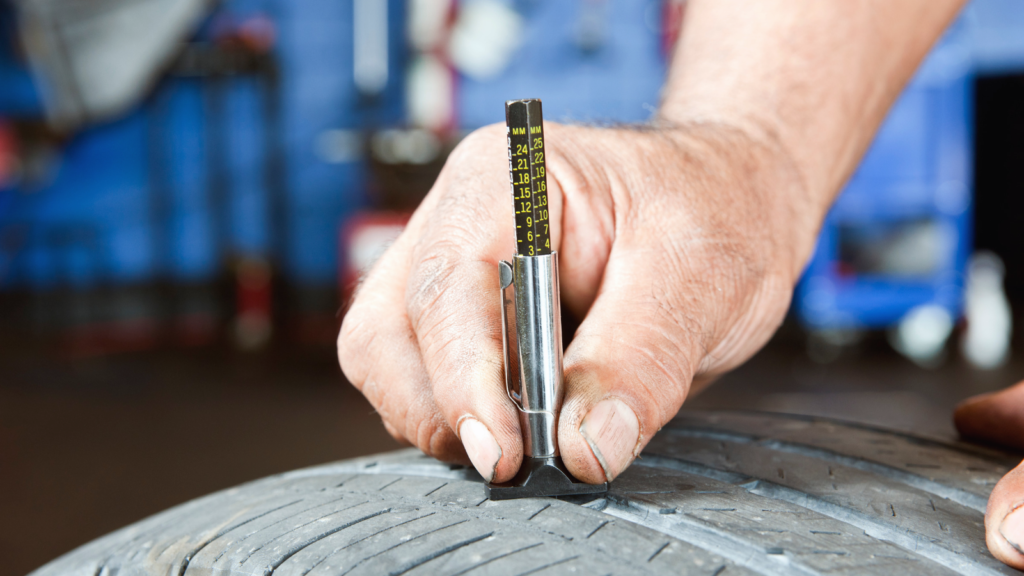
A tread depth gauge is the most reliable way to check tread wear. Insert the probe into a major tread groove, press the base flat against the tire surface, and read the millimetre measurement. Take readings at three points around the circumference of each tire — tread wears unevenly, and one shallow spot can fail an inspection.
Tread depth gauges are inexpensive and available at most Ontario auto parts stores. They give an exact reading against either the 1.5mm or 2mm threshold.
Read the Tread Wear Indicator Bars
Tread wear indicators are raised bars moulded into the tread grooves. Manufacturers typically set them at approximately 1.6mm. When the tread surface is flush with the wear indicator bars, the tire has reached the manufacturer’s replacement point and is already below the 2mm safety inspection minimum.
New tires come with approximately 8mm to 9mm of tread depth. That distance from new to flush wear bars is the usable life of the tire.
The Penny Test No Longer Applies
The penny test used a Canadian one-cent coin to estimate tread depth. The Canadian penny was retired in February 2013 and is no longer in general circulation. The test also only approximates a single depth and gives no information about whether you are above 1.5mm, 2mm, or 4mm. Use a tread depth gauge.
The 4mm Mark: Where Performance Drops
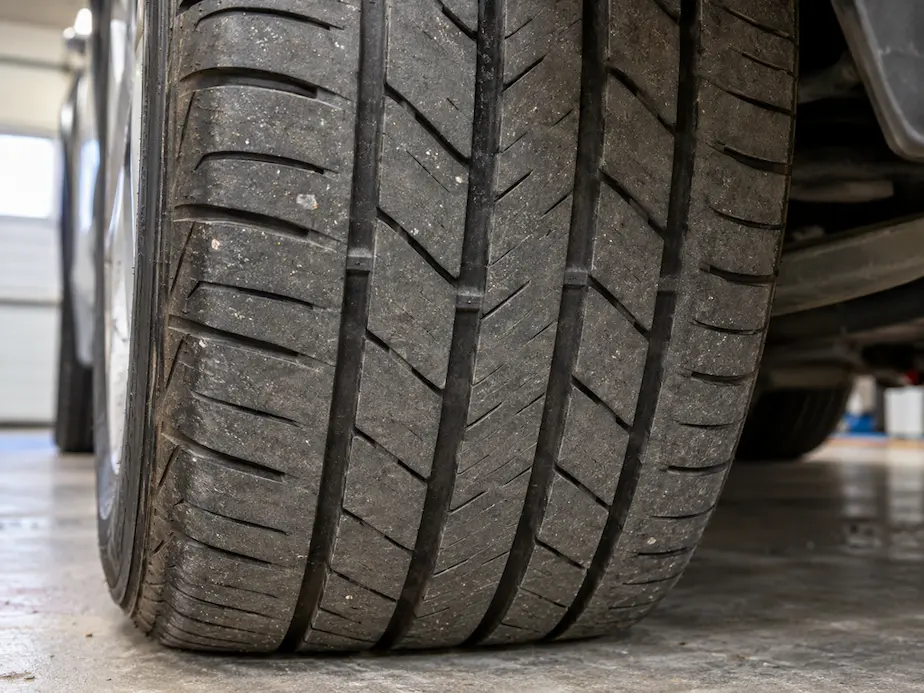
The legal minimums define the floor. The 4mm threshold reflects where handling and stopping distances become noticeably worse in real Ontario conditions.
Deep grooves in tire tread act as channels to evacuate water from beneath the tire. As those channels wear down, wet-road traction drops and the risk of hydroplaning increases. Research on stopping distances consistently shows that tires below 4mm take significantly longer to stop on wet pavement than tires with adequate tread. On snow-covered roads, the effect is more pronounced. Transport Canada tire safety guidance treats 4mm as the practical threshold for wet-weather confidence.
Tire pressure also matters here. An underinflated tire reduces the contact patch and drives uneven tread wear, which can push one groove below the legal minimum while others read well above it.
Winter Tires and Tread Depth
Winter tires depend on deep, open tread patterns to grip ice and snow. When depth drops to around 4mm, performance on snow declines substantially — the rubber compound helps, but the tread geometry is mostly gone.
Ontario’s 7°C threshold applies whether tires are new or worn: switch when temperatures consistently fall below 7°C. A worn winter tire at 3mm heading into a Brampton or Mississauga winter provides far less protection than a fresh set at 8mm.
Uneven wear across a winter set — shallower at the edges than the centre — usually signals a tire pressure or alignment problem. It also shortens the effective service life and can leave one groove below the certificate minimum while others read above it.
Uneven Tread Wear: What It Signals
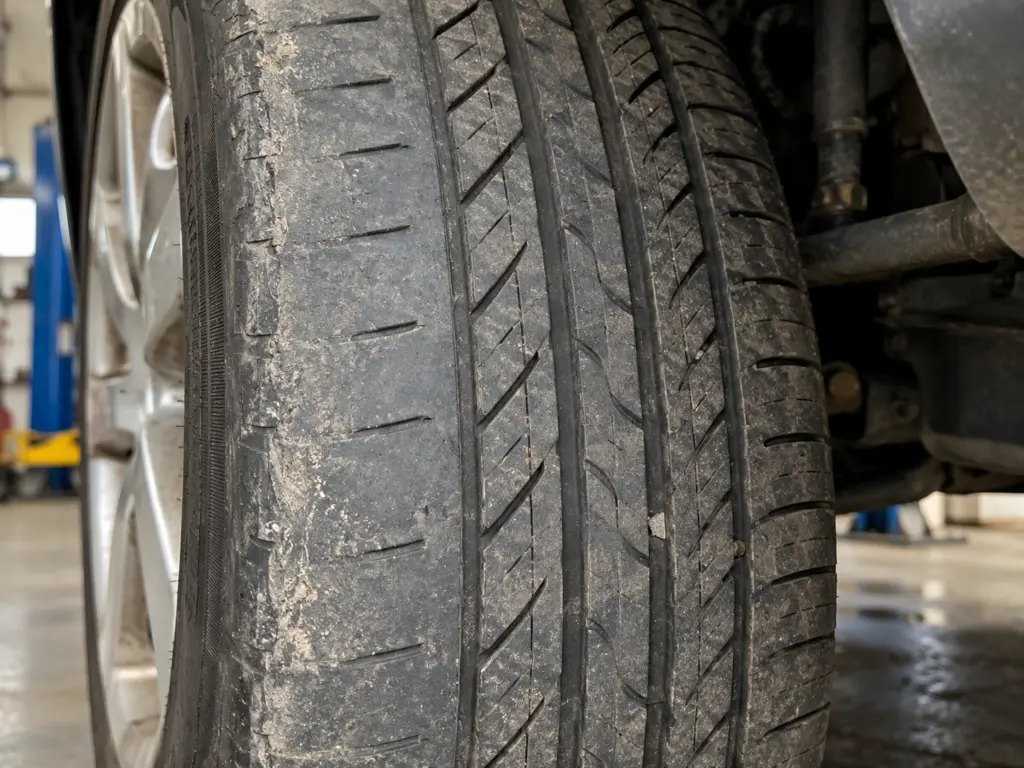
Wear concentrated on one edge typically points to a wheel alignment issue. Centre-only wear indicates the tire has been running overinflated. A scalloped or cupped pattern usually means a suspension component is not holding the wheel correctly against the road.
MTO inspection stations check tread depth at multiple groove positions and multiple points around the tire. Uneven tread wear can produce a shallow reading that fails the vehicle even when the deepest groove reads above 2mm.
Tires showing shallow tread alongside visible cracking in the sidewall or tread grooves carry two separate problems. Both need attention before a safety inspection.
Frequently Asked Questions
What is the minimum tread depth in Ontario for a safety certificate?
Section 9 of the MTO Passenger/Light-Duty Vehicle Inspection Standard requires a minimum of 2mm in every major tread groove. One tire below that threshold fails the inspection.
What is the required legal tread depth of a tire in Ontario?
For road use, R.R.O. 1990, Reg. 625 sets the minimum at 1.5mm for passenger vehicles. This number applies while the vehicle is being driven on a public Ontario road.
What is the minimum tire tread depth in Ontario for safety on wet roads?
Legally, 1.5mm. In practice, tire research and Transport Canada guidance point to 4mm as the threshold where wet-weather traction and stopping distances become significantly worse.
Can I check tread depth without a gauge?
The tread wear indicator bars give one reference point. When those bars are flush with the tread surface — approximately 1.6mm — you are already below the 2mm safety certificate standard. For exact readings, use a tread depth gauge.
Book Your Mobile Tire Change
If your tread is approaching 2mm, if the wear indicator bars are showing, or if you need a seasonal swap before winter, Fix My Tires sends a technician to your location. No shop visit, no tow. Call (289) 401-8473 or visit fixmytires.ca/services/ to book.