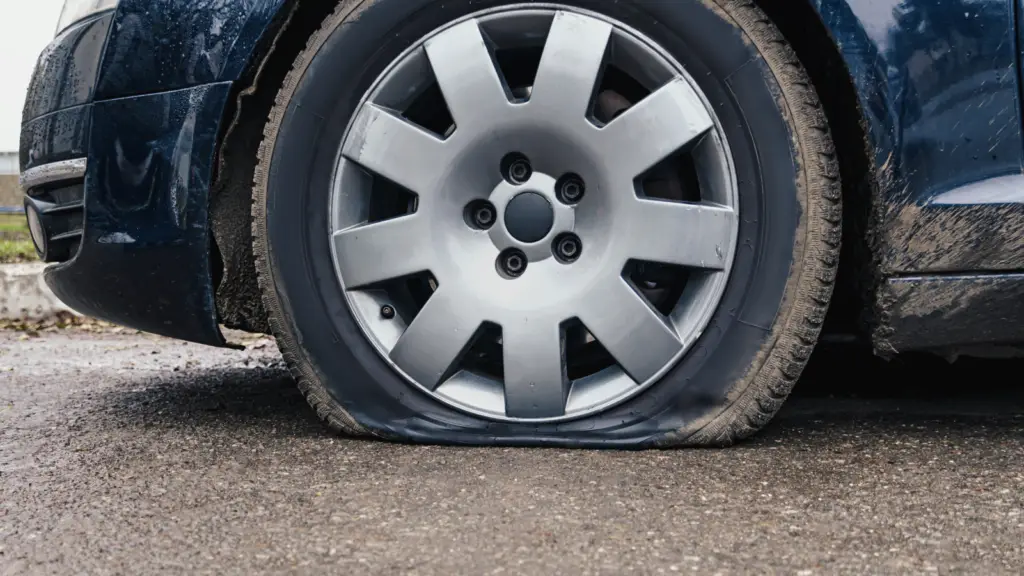
A standard flat tire repair cost in Ontario is $20–$45 at a tire shop and $75–$120 for a mobile service that comes to you in Mississauga or elsewhere in the GTA. The price depends on where the hole is, which repair method the technician uses, and whether someone drives to your location or you bring the vehicle in.
Most drivers discover a nail in a tire at the worst possible moment — parked at work, on the highway shoulder, or pulling out of the driveway on a schedule. The first question is almost always the same: how much is this going to cost, and is it worth fixing?
Knowing the answer before you call matters for two reasons. First, it keeps you from agreeing to a price that does not match what the job actually is. A $15 plug done without removing the tire from the rim is a different service than a $40 patch-plug where a technician pulls the tire, inspects the inner liner, and seals it properly from the inside — and the cheaper version can fail on the highway. Second, understanding what drives the cost helps you figure out quickly whether you have a repairable puncture at all, or whether you are looking at a replacement regardless of price.
This post covers what Ontario drivers typically pay, what changes that number, and how to tell a proper repair from one that will not last.
How Much Does a Flat Tire Repair Cost?
For a standard tread puncture on a passenger vehicle, Ontario drivers typically pay:
| Repair type | At a shop | Mobile (GTA) |
|---|---|---|
| Standard patch-plug | $20–$45 | $75–$120 |
| Plug-only (roadside temporary) | $15–$30 | $60–$90 |
| Run-flat tire repair | $80–$150+ | $120–$200+ |
Shop prices cover labour and materials. Mobile prices include the call-out — a technician drives to your driveway or roadside location with the equipment to do the full job on-site. The gap between shop and mobile reflects travel and setup, not a difference in repair quality.
Most standard repairs at a fixed shop take 20–30 minutes once the vehicle is on the lift. A mobile technician working at your location typically takes 30–45 minutes, including removing the tire from the rim, inspecting the inner liner, completing the repair, remounting, and balancing.
What Changes the Price of a Flat Tire Repair
Most puncture repairs land within a predictable range, but several factors push the cost higher:
Hole location and size. A puncture in the repairable centre tread area is straightforward. A hole at the shoulder, near the sidewall, or larger than 6mm cannot be safely repaired — the tire needs replacing, which is a separate cost entirely.
Repair method. A plug-only repair done from outside the tire without removing it from the rim is faster and cheaper but is not considered a permanent fix by industry repair standards. A proper patch-plug — where the tire comes off the rim and the inner liner is inspected and patched — takes longer and costs more, but it is the correct repair.
Tire type. Run-flat tires and low-profile performance tires require more care to demount and remount without damage to the bead. Specialty tires carry higher repair labour costs at most shops.
TPMS sensor. Vehicles with a tire pressure monitoring sensor on the wheel may require the sensor to be reseated or recalibrated after a repair. Some shops include this; others charge separately. Ask before the work begins.
After-hours and emergency calls. Mobile services responding to a roadside emergency late at night or on a holiday often charge a premium above the standard call-out rate. Expect to pay $20–$50 more for after-hours dispatch depending on the provider.
Travel distance. Mobile providers in the GTA generally charge a flat call-out rate that includes travel within a set radius. Locations outside that radius may carry an additional distance fee.
Run-Flat Tire Repair
Run-flat tires are engineered to support the vehicle’s weight for a limited distance after losing air pressure. That construction — reinforced sidewalls, thicker rubber — makes them harder to demount and remount without damaging the bead. Most manufacturers recommend replacing a run-flat that has been driven flat rather than repairing it; confirm this with the technician before authorizing a repair on a run-flat tire.
Tire Plug vs Patch: Which Repair Do You Need?
Three repair methods are in common use. They are not equally safe, and the right one depends on the damage location and what the inner liner looks like once the tire is off the rim.
What a Plug Does
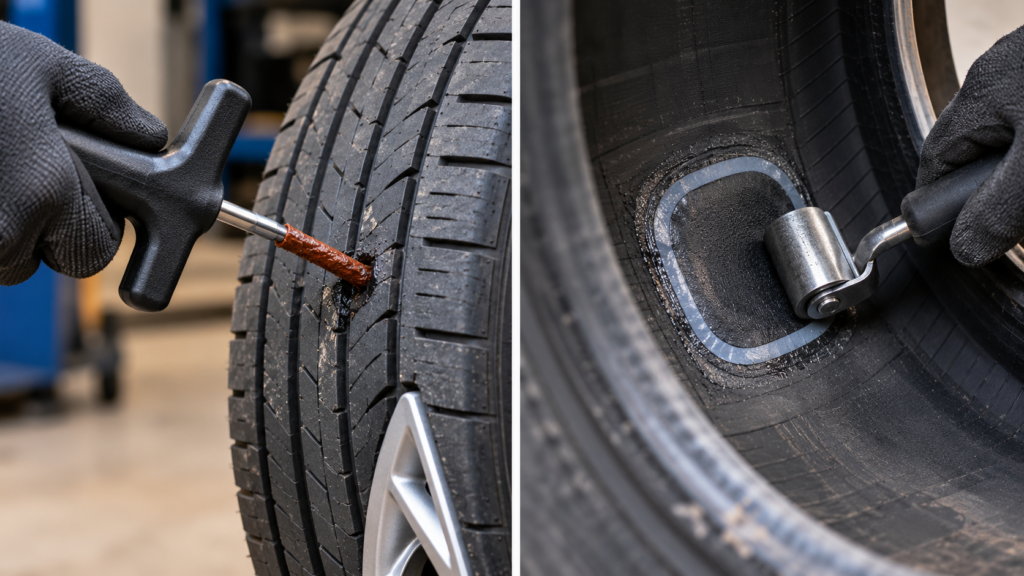
A plug-only repair is done from the outside without removing the tire from the wheel. A rubber stem is pushed through the puncture channel to seal the hole. It is the fastest and cheapest option, and many roadside service providers offer it. The limitation is that the inner liner is never inspected, so hidden structural damage — a weakened belt, a pinched cord, a separated layer — goes undetected. Industry repair standards do not consider a plug-only repair to be a permanent fix.
What a Patch-Plug Does
A combination patch-plug is the industry-standard permanent repair. The tire comes off the rim first. The technician inspects the full inner liner before doing anything else — this is the step that catches damage invisible from outside. The puncture channel is then filled with a rubber stem, and the inner liner is sealed with a bonded patch. A properly done patch-plug from a reputable shop or mobile service should last the remaining life of the tire.
Avoid any provider who will not take the tire off the rim. An external plug left in place as the final repair is not a safe permanent solution, regardless of how confidently it is presented.
When a Tire Cannot Be Repaired
Some damage means replacement is the only safe option. A technician who finds any of the following will recommend a new tire:
Sidewall or shoulder damage. The sidewall flexes continuously while driving and cannot hold a patch. Any puncture from the shoulder inward to the rim bead is not repairable. Industry repair standards define the sidewall as a non-repairable zone; R.R.O. 1990, Reg. 625 also rejects tires with cuts that expose the cords.
Hole larger than 6mm. Larger punctures remove too much rubber for a patch-plug to seal reliably.
Driven flat. A tire run while flat or severely underinflated generates heat and stress that can break internal cords and separate the belts. The inner liner inspection during a proper repair reveals this; when it is found, the tire is done regardless of how minor the original puncture appeared.
Overlapping repairs. A tire with a prior repair in the same zone cannot be patched again. The rubber around the original repair has already been compromised.
Worn tread. A repaired tire with tread below the legal or safety minimum cannot legally go back into service. Ontario’s on-road minimum is 1.5mm (R.R.O. 1990, Reg. 625); the Safety Standards Certificate minimum is 2mm (MTO Passenger/Light-Duty Inspection Standard, Section 9). If the repair would pass but the tire is already near the end of its life, replacement is the more practical choice.
If you are also seeing cracks in the sidewall or tread grooves alongside a puncture, those are a separate problem — cracking signals rubber aging, not a repairable injury. See can cracked tires be repaired for a full breakdown of when cracking means replacement.
After-Hours and Emergency Repair Costs
A puncture at 11 pm or on a holiday costs more than the same job on a weekday afternoon. Mobile providers handling emergency dispatch outside regular hours typically charge $20–$50 above their standard call-out rate. Ask the dispatcher before confirming the booking — reputable services quote the full price upfront, including any after-hours premium, travel distance fees, and TPMS recalibration if applicable.
Mobile Flat Tire Repair vs Driving to a Shop
A slow leak with enough air left to move the vehicle can tempt drivers to limp to the nearest shop. The risk is that a repairable puncture becomes an unrepairable one. A tire run at low pressure — even for a few kilometres — generates heat and lateral stress that can separate the inner liner from the carcass. What would have been a $30 repair becomes a tire replacement.
A mobile repair removes that risk entirely. The technician comes to where the vehicle is already stopped and completes the full job on-site. For a full comparison of cost, time, and logistics between mobile repair and a traditional shop visit, see the mobile tire change vs shop cost and time breakdown.
What to Do Until the Technician Arrives
If you have a flat or a tire losing pressure, four steps reduce the risk while you wait:
- Pull well off the road. Get the vehicle completely clear of traffic on a level surface before stopping.
- Switch on the hazard lights. Visibility matters, particularly on highways or at night.
- Do not drive on the flat. Even a short distance at speed on a flat tire can destroy the sidewall and make the tire unrepairable.
- Note the TPMS warning light. A TPMS light that stays on after you stop means the sensor detected low pressure. Pass that information to the technician — it helps them rule out a slow leak elsewhere on the vehicle.
For a detailed walkthrough of what to do after a flat anywhere in the GTA, see flat tire in the GTA: what to do and when mobile repair beats a tow.
Frequently Asked Questions
How much should it cost to patch a hole in a tire?
A standard patch-plug repair at an Ontario tire shop runs $20–$45. Mobile service in the GTA, where a technician comes to your location, typically costs $75–$120. A hole is not patchable if it sits in the sidewall or shoulder, exceeds 6mm, or if the inner liner shows structural damage when the tire comes off the rim.
How much does it cost to repair a puncture on a tire in Canada?
In Ontario, a tread puncture repair at a shop costs $20–$45 for the labour and materials. A mobile repair in the GTA — where the technician drives to your driveway or roadside location, removes the tire, inspects it from the inside, and completes the patch-plug on-site — runs $75–$120 depending on the provider, tire type, and time of day.
Can cracks in a tire be repaired?
No. Sidewall and tread cracks are a sign of rubber aging and oxidation, not a puncture that can be patched. A cracked tire needs to be replaced. See can cracked tires be repaired for how to assess severity.
Book Mobile Flat Tire Repair With Fix My Tires
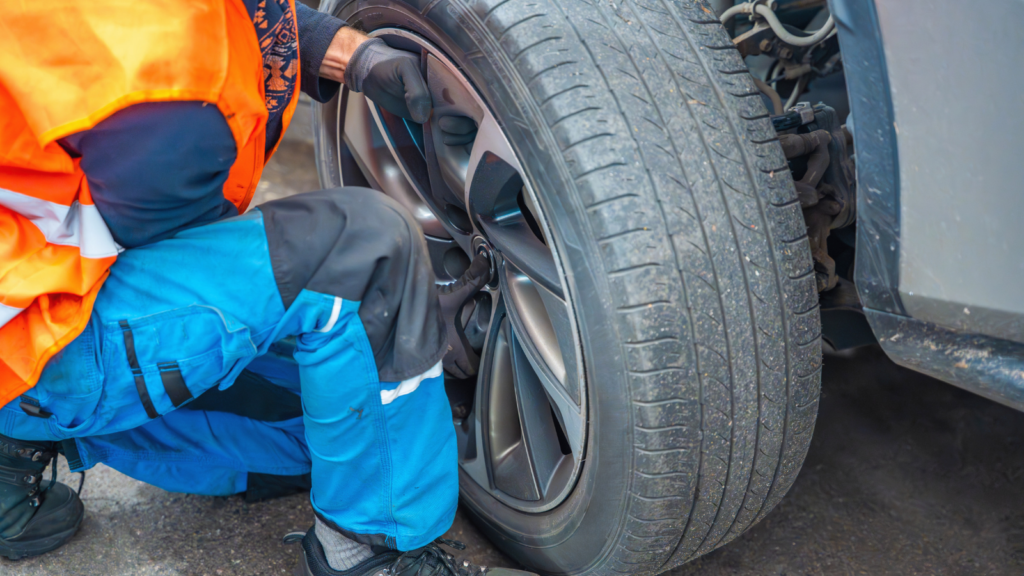
Fix My Tires handles flat tire repair across Mississauga, Toronto, Brampton, Oshawa, and Whitby — a technician comes to your location, removes the tire, inspects it from the inside, and completes a proper patch-plug repair.
Call (289) 401-8473 to book.