A steady TPMS light means one or more of your car’s tires are approximately 25% below the recommended inflation pressure. A flashing light at start-up usually signals a sensor fault, not low pressure. You can drive slowly to the nearest air pump — not on the highway. This guide is for Ontario drivers who want to know what the warning means, how to check and correct tire pressure, and when the sensor itself needs attention. Acting promptly matters: underinflated tires increase braking distances and raise the risk of a blowout.
Key Takeaways
- Steady TPMS light: one or more tires are roughly 25% below the recommended pressure
- Flashing TPMS light: sensor fault or system malfunction — air pressure may still be fine
- Recommended tire pressure is on the driver’s doorjamb sticker, not the tire sidewall
- A 6°C temperature drop lowers tire pressure by approximately 1 PSI
- Check tire pressure cold — after the vehicle has sat for at least three hours
- TPMS is a warning system, not a substitute for regular tire pressure checks
- Ignoring the light can lead to a blowout and excessive tread wear
What Does the TPMS Light Mean?
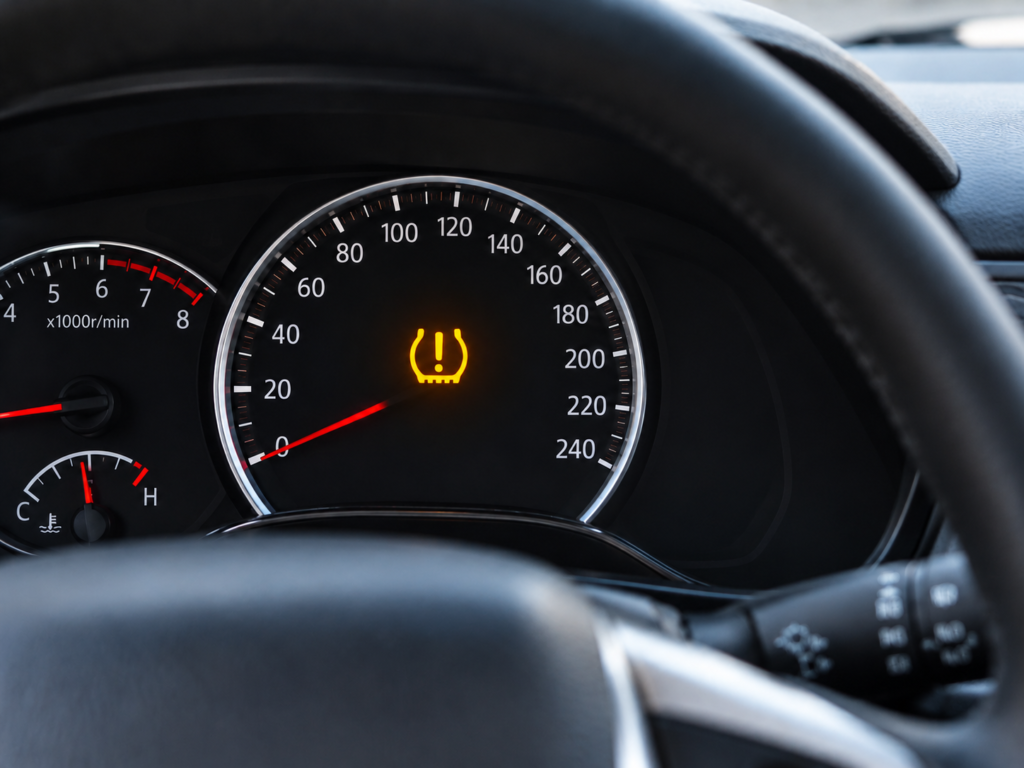
The tire pressure monitoring system (TPMS) monitors your vehicle’s tires in real-time and triggers a dashboard warning when air pressure drops to a level that affects safety. The warning light appears as a cross-section of a tire with an exclamation point in the centre. How it behaves tells you which type of problem you have.
A steady TPMS light means one or more tires are approximately 25% below the recommended inflation pressure. The tire has not gone flat, but it has lost enough air to reduce traction, extend braking distances, and stress the tire’s internal structure.
A flashing TPMS light — blinking for roughly 60 to 90 seconds at start-up before staying on — usually indicates a sensor fault or system malfunction rather than low pressure. A malfunctioning TPMS sensor may require professional inspection and possible replacement.
Check 1: Read the Light
A steady light means low pressure — check all four tires and inflate before driving further. A flashing light means the system itself has a fault; inflating the tires will not clear it. Both require attention, but the steps are different.
Can You Keep Driving With the TPMS Light On?
Drive slowly and only as far as the nearest air pump or service point. Do not drive at highway speed with the TPMS warning light on.
An underinflated tire generates heat from increased contact between the rubber and the road surface. That heat breaks down the tire’s structure over kilometres, raises rolling resistance, causes handling issues, and increases the blowout risk. Low tire pressure also compromises vehicle stability, increases fuel consumption, and wears tread unevenly.
If the light came on at highway speed, reduce speed and exit at the next off-ramp. Fill the tire with air before driving further.
How to Check Your Tire Pressure
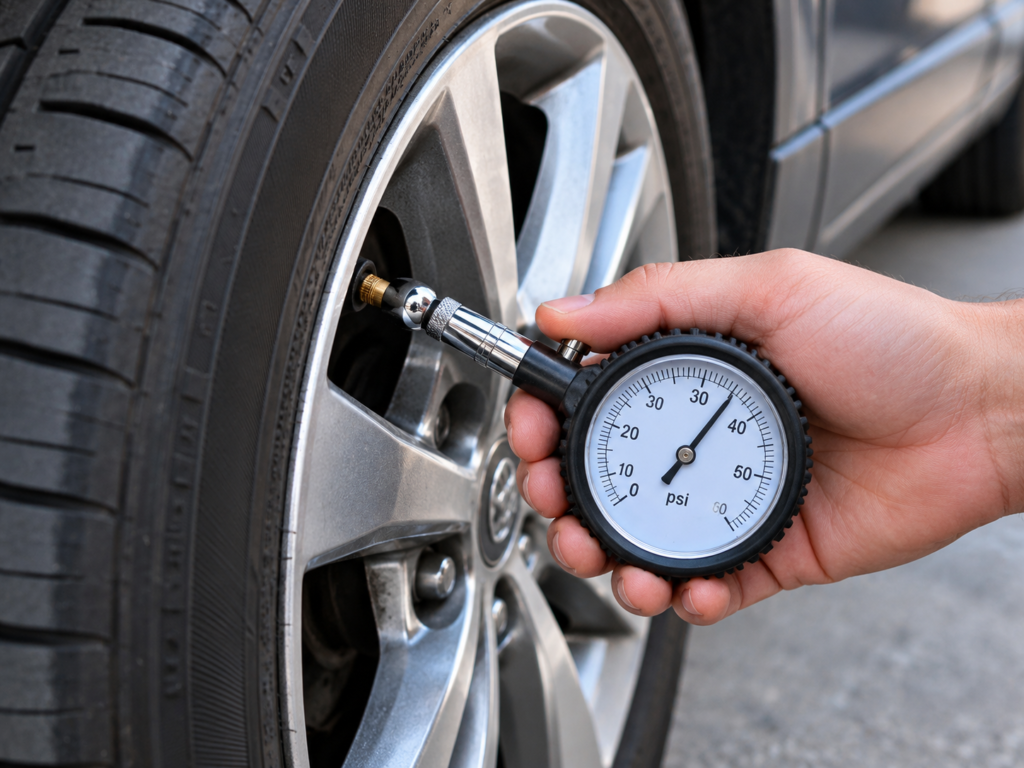
A tire pressure gauge — stick or digital — gives an accurate reading in under a minute. A few steps make the difference between a useful reading and a misleading one.
Wait for cold tires. Driving raises air temperature inside the tire temporarily. For an accurate reading, wait at least three hours after the vehicle last moved.
Seat the gauge on the valve stem. Remove the valve cap and press the tire gauge firmly onto the valve. A hissing sound means air is escaping — reposition until the seal is clean.
Compare to the door sticker. Match the measured PSI against the recommended tire pressure on the driver’s doorjamb sticker. Use an air compressor to fill a low tire. To release air from an overinflated tire, press the pin at the centre of the valve stem until pressure drops to the correct level.
Check all four tires. Pressure varies between front and rear and between sides. Do not stop after finding one low tire.
What Is the Correct Tire Pressure?
The correct pressure for your vehicle’s tires is on the sticker inside the driver’s doorjamb. It is also in the owner’s manual. This is the vehicle manufacturer’s recommended pressure at normal load — the figure the car was engineered for.
Do not use the maximum pressure on the tire sidewall. That figure — marked max psi or max pressure — is the structural limit the tire can hold, not the inflation target. Running tires at that figure creates overinflated tires that wear the centre tread faster and transfer more stress to suspension components.
For most Ontario passenger cars, recommended pressure falls between 30 and 35 PSI — pounds per square inch. The correct figure depends on the vehicle, so the doorjamb sticker is always the authoritative source. Regular tire pressure checks — at least monthly — catch slow losses before the TPMS warning activates. This also applies to winter tires: check air pressure on each tire when switching sets in autumn.
What Causes the TPMS Light to Come On?
Temperature Changes
A 6°C drop in ambient temperature lowers tire pressure by approximately 1 PSI. A tire correctly inflated on a warm September afternoon may trigger the warning on a cold October morning. If the light disappears after the car warms up and does not return, temperature was likely the cause. Check the actual pressure anyway — TPMS is a warning system, not a maintenance tool.
Slow Air Leak or Valve Fault
A puncture, a cracked valve stem, or a bead leak can cause gradual air loss. The light often appears before the tire looks flat. A tire gauge identifies which tire is low; inspect the sidewall, tread, and valve to find the source.
Sensor Malfunction
Each tire pressure sensor runs on a battery rated for roughly 5 to 10 years. A flashing light — or one that stays on after inflating to correct pressure — often means a sensor needs professional attention. Inflating the tires will not fix a failing sensor.
How to Reset the TPMS Light
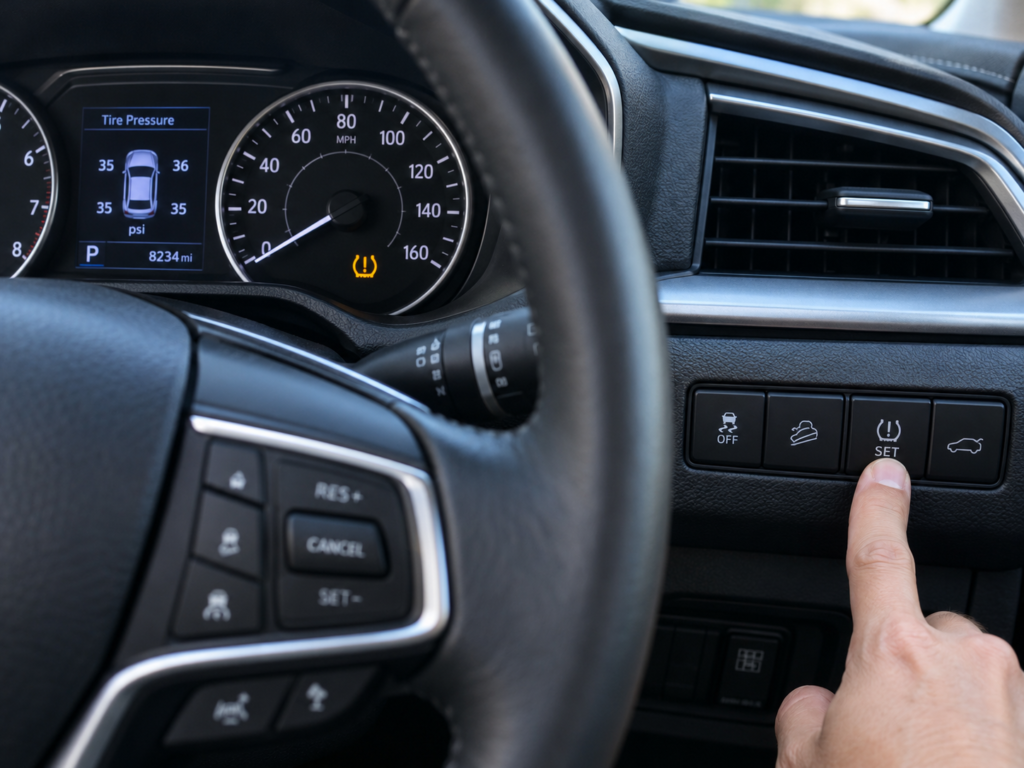
After inflating all four tires to the correct pressure, driving a short distance allows the sensors to transmit updated readings and the system to clear the warning. On some vehicles, a manual reset step is needed — consult the owner’s manual for vehicle-specific TPMS reset procedures.
If the light returns within a day, re-check pressure. If it flashes or stays on after correct inflation, the sensor needs inspection.
Frequently Asked Questions
What is the recommended tire pressure for my car’s tires?
The recommended tire pressure is on the driver’s doorjamb sticker, measured in pounds per square inch. The tire sidewall lists maximum pressure — a structural limit, not the inflation target. Use the door sticker figure and confirm in the owner’s manual.
Can overinflated tires trigger the TPMS light?
Most systems do not trigger the warning for overinflation — the TPMS warning activates when pressure falls roughly 25% below the recommended level. Overinflated tires wear the centre tread faster and reduce road grip, but in most vehicles they will not activate the warning.
Is the maximum pressure on the tire sidewall the correct pressure to use?
No. Max psi or maximum pressure on the sidewall is a structural ceiling, not a target. Using it creates overinflated tires with faster centre wear and a harder ride. The correct pressure is on the driver’s doorjamb.
Does the TPMS light come on in cold weather?
Yes. A 6°C temperature drop lowers pressure by approximately 1 PSI. Check tire pressure and inflate to the correct level if the light appears on a cold morning. For more on winter temperatures and tire pressure, see how the TPMS light behaves in cold weather.
Do new tires need TPMS sensors?
Yes, if your vehicle already has TPMS. When new tires are installed, the sensors from the old set are transferred or replaced at the same appointment. A sensor left out will trigger a fault light. Ask the technician before work begins.
Book a Mobile Tire Service With Fix My Tires
If your TPMS light is on and you need tires inflated, inspected, or changed on-site, Fix My Tires handles mobile tire service across Mississauga, Toronto, Brampton, Oshawa, and Whitby.
Call (289) 401-8473 to book.