All season tires are not certified for severe winter conditions in Canada. All weather tires carry the three peak mountain snowflake symbol and can stay on year round. Dedicated winter tires are safest below 7°C. Fix My Tires handles winter tire installation across Mississauga and Ontario without a shop visit.
Key Takeaways
- All season tires lose elasticity below 7°C and lack severe winter certification
- All weather tires carry the three-peak mountain snowflake symbol — all-season tires do not
- Dedicated winter tires reduce braking on ice by up to 40% compared to all-season tires
- Quebec mandates winter tires December 1 to March 15; British Columbia requires them on many routes October 1 to April 30
- Always fit four winter tires — fitting only two creates unpredictable handling; swap back to summer tires when temperatures rise above 7°C
The Short Answer
For most Ontario drivers: dedicated winter tires are safest from late October to April. All-weather tires suit mild to moderate winters. All-season tires alone are inadequate below 7°C. Studded tires are also legal in some regions, with rules varying across Canada. For the timing guide including Ontario’s 7°C rule and insurance discount, see when to switch to winter tires in Ontario.
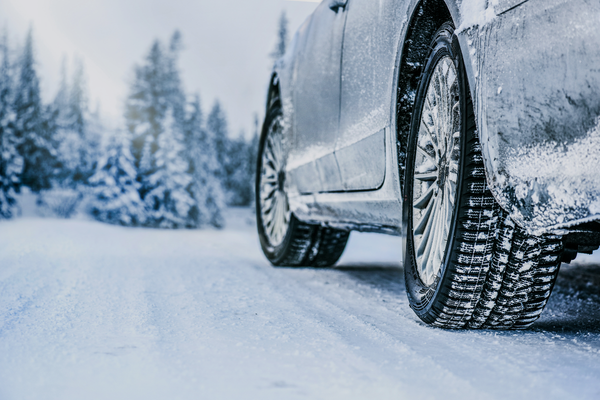
Side-By-Side Comparison
Comparison Table
| Feature | All-Season | All-Weather | Dedicated Winter |
|---|---|---|---|
| 3PMSF snowflake symbol | No | Yes | Yes |
| Effective below 7°C | No | Partial | Yes |
| Severe snow and ice | No | Moderate | Yes |
| Year-round use | Yes | Yes | No — swap required |
| Best traction on black ice | No | Moderate | Yes |
| Wet roads / freezing rain | Good | Good | Good |
| Braking on packed snow | Poor | Moderate | Best |
| Tread depth wears fastest | Hot weather use | Moderate | Summer/heat use — not their season |
Cost
All-season tires are typically least expensive — brands including Goodyear, Michelin, and Bridgestone offer lines from around $120–$180 per tire. All-weather tires run $180–$280 per tire. Dedicated winter tires range from $150–$350. All-weather tires eliminate the seasonal swap cost; dedicated winter tires require two changeovers per year.
General market ranges only — not Fix My Tires pricing.
All-Season In Detail
All-season tires handle warm weather, light rain, and light snow. Their rubber hardens below 7°C, reducing grip on cold wet roads, packed snow, and ice. Most carry an M+S designation, which is not the same as the three-peak mountain snowflake symbol.
The Caveat Most People Miss
An M+S marking does not confirm severe snow traction — only the three-peak mountain snowflake symbol does.
All-Weather In Detail
All-weather tires use a compound that stays flexible in cold while remaining usable in summer. They carry the 3PMSF symbol, qualifying for Ontario’s insurer discount. Performance in extreme cold is better than all-season but below dedicated winter tires.
Time And Effort
All-season and all-weather tires require no seasonal swaps. Dedicated winter tires need two changeovers per year — mid-October and April. A mobile changeover removes the shop visit.
Outcome And Risk
Dedicated winter tires give maximum grip and shortest braking distances on ice. All-weather tires close most of that gap in moderate climates. All-season tires in Canadian winters increase braking distances on ice.
When Dedicated Winter Tires Are The Right Call
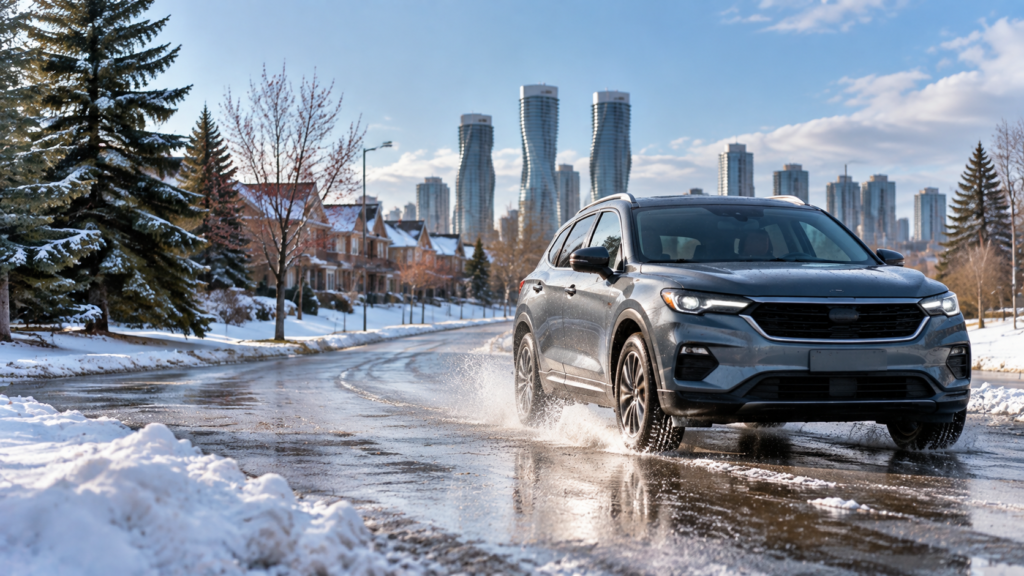
You drive in Ontario, Quebec, or British Columbia. Quebec mandates them by law. British Columbia requires them on designated highways. Ontario drivers qualify for an insurer discount and face extreme cold, freezing rain, significant snowfall, and black ice from November through March.
You drive at highway speeds in cold. On packed ice, dedicated winter tires provide meaningfully shorter stopping distances than all-weather tires.
You carry passengers regularly. The safety margin in heavy snow and black ice is measurable and documented.
When All-Weather Tires Are The Right Call
You live in a region with mild to moderate winters. Southern Ontario cities without extreme winters are reasonable candidates for all-weather tires.
You have limited storage space. All-weather tires stay on year round, eliminating the need to store a second set of season tires.
You want 3PMSF certification without seasonal swaps. All-weather tires qualify for Ontario’s insurer discount without requiring a dedicated winter set.
What Most People Get Wrong
The most common mistake is treating M+S all-season tires as winter-certified. M+S requires only a basic mud and snow traction test — no cold-temperature compound standard. The three-peak mountain snowflake symbol requires at least 10% better snow traction in a controlled test. M+S alone has not passed it.
A second mistake: AWD and 4WD improve acceleration on ice but not braking. Four winter tires on a front-wheel-drive vehicle stop shorter on ice than two on an AWD.
What We Recommend For Mississauga Drivers
For most Mississauga and GTA drivers, dedicated winter tires on a separate set of rims remain the safest choice. Each set is used in its ideal temperature range, extending tire life on both. For year-round convenience, all-weather tires with the snowflake symbol are a sound second choice for moderate winters. Book a winter tire installation and a technician handles the changeover at your location.
Frequently Asked Questions
What is the difference between all-season and all-weather tires?
All season tires lack the three peak mountain snowflake symbol and are not certified for severe winter conditions. All weather tires carry the 3PMSF symbol, use a more flexible cold-weather compound, and can stay on year round. Below 7°C, all-season tires harden and lose grip.
Are all-weather tires good enough for Canadian winters?
For moderate winters, yes. In severe conditions with heavy snow, extreme cold, or regular black ice — common in northern Ontario, Quebec, and British Columbia — dedicated winter tires provide shorter braking distances and are the safer choice.
Do I need four winter tires or just two?
Always four. Two winter tires creates a handling imbalance — the non-winter axle loses traction in cold while the other grips, causing unpredictable oversteer or understeer. Four winter tires on all wheels ensure consistent traction throughout the winter months.
What does the three-peak mountain snowflake symbol mean?
It means the tire passed a severe snow traction test, achieving at least 10% better performance than a reference tire. All dedicated winter tires carry it; all-weather tires that meet the same standard also carry it. An M+S marking alone does not meet this certification.
About Fix My Tires
Fix My Tires provides mobile tire service across Mississauga and the GTA — winter tire installation, seasonal changeovers, flat repairs, and new tire sales at your location. Certified technicians come to your driveway with shop-grade equipment, no shop visit required.
Service Area
Fix My Tires serves Mississauga, including Streetsville, Meadowvale, Erin Mills, Port Credit, and Malton, along with Brampton, Whitby, Oshawa, and Toronto.
Next Step
Book a winter tire installation before the October rush and get your tires swapped, balanced, and pressure-set at your location.
Call +1 (289) 401-8473.