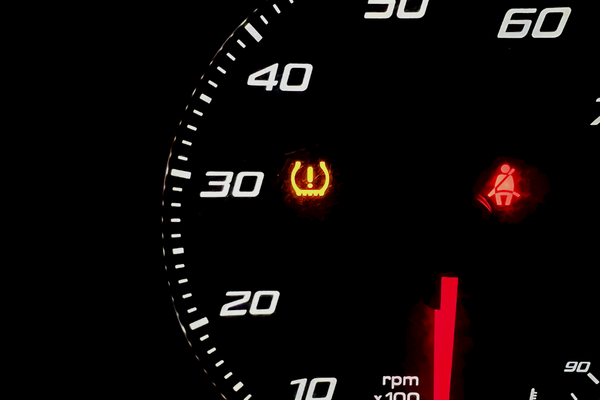
Cold air contracts. When Ontario temperatures drop, so does the air pressure inside your tires — roughly 1 PSI for every 6°C fall. Fix My Tires explains why the tire pressure warning light appears every winter, what it means, and when low pressure signals something more serious.
Key Takeaways
- Tire pressure drops approximately 1 PSI for every 6°C of temperature decrease
- The TPMS light activates when pressure falls roughly 25% below the recommended level
- Recommended tire pressure is on the placard inside the driver’s doorjamb — not on the tire sidewall
- A flashing TPMS light signals a sensor malfunction; a steady one means low pressure in one or more tires
The Short Version
Cold weather causes air inside your tires to contract, reducing pressure in all four tires at once. The tire pressure monitoring system triggers its warning light when pressure drops far enough below the recommended level. In most cases, adding air to the correct tire pressure resolves it — but if the light stays on after inflation, a mobile tire service inspection can confirm whether a slow leak or faulty TPMS sensor is the cause.
The Detail
| Temperature Drop | Approximate Pressure Loss |
|---|---|
| 6°C | ~1 PSI per tire |
| 15°C (a typical Ontario cold snap) | ~2.5 PSI per tire |
| 30°C (seasonal shift, fall to mid-winter) | ~5 PSI per tire |
Cold Air Contracts, And Your Tires Feel It
Air pressure measures how many molecules are packed into a given space per square inch. When temperature drops, those molecules slow down and pack less forcefully, reducing pounds per square inch without any air physically escaping. This is why all four tires lose pressure simultaneously when cold weather arrives — physics, not a puncture.
A car sitting overnight in a Mississauga winter can drop 2 to 3 PSI below recommended fill pressure before the driver starts the engine. Once pressure falls far enough, the TPMS warning light activates.
Driving Warms Tires — But Only Temporarily
Driving generates heat through rolling resistance and road impact, temporarily raising air pressure inside the tire. This is why checking tire pressure immediately after driving gives an inaccurate reading — tires need to sit for at least three hours for an accurate cold reading, which is what the vehicle manufacturer’s recommended pressure is calibrated for.
Filling tires based on a warm reading can leave them underinflated when cold, causing the pressure warning light to return.
The Exception
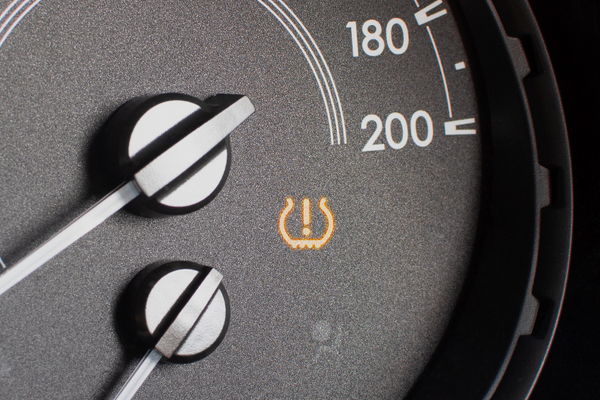
A TPMS light that appears while driving and then disappears after the vehicle warms up is not confirming proper pressure — it often means pressure was borderline at startup and heat pushed it above the trigger point temporarily.
Why It Happens
The sensor reads real-time pressure. A tire 1–2 PSI below the trigger point at startup may warm above it quickly, giving the false impression the light resolved.
How To Spot It Early
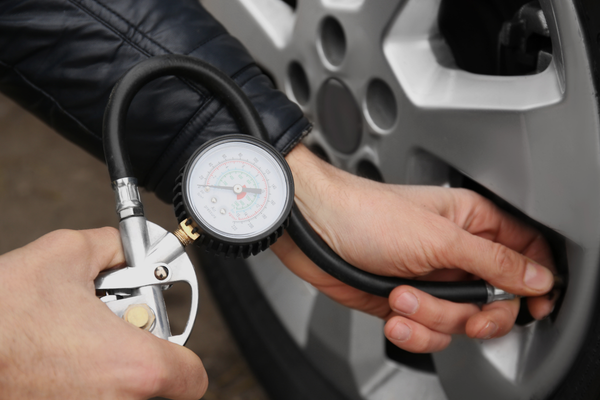
Check cold pressure with a gauge before the first drive — not after.
When The TPMS Light Flashes Instead Of Staying Steady
A steady TPMS light means low pressure. A flashing light at startup — typically 60–90 seconds before going steady — usually signals a sensor malfunction: a dead battery, faulty sensor, or a system needing a reset after a tire change. TPMS sensors last around 10 years; batteries inside direct sensors are sealed, so the whole sensor is replaced when they die.
How This Plays Out In Ontario
Ontario winters deliver ideal conditions for repeat TPMS activations. A vehicle parked outside in Mississauga, Brampton, or Oshawa from November to March can see ambient temperature swing 30°C between a warm fall day and a February cold snap — a loss of roughly 5 PSI in all four tires from temperature alone.
The light comes on in November, the driver adds air, it goes off. By February it is back — seasonal shift consumed the margin again. Monthly pressure checks through winter prevent most repeat warnings. If you want to know whether you can keep driving when the light is on, see what the TPMS light means.
What People Get Wrong
Using the number on the tire sidewall. The max psi stamped on the sidewall is the maximum pressure the tire can hold — not the correct pressure for the vehicle. The recommended fill pressure is on the placard inside the driver’s door jam or in the owner’s manual.
Adding air to warm tires. Filling warm tires to the recommended cold pressure leaves them overinflated once they cool, affecting handling and increasing tread wear.
Assuming the light means a flat. The TPMS light activates before a tire goes flat — it is an early warning. An underinflated tire can look normal to the eye. Driving on low pressure reduces fuel efficiency and accelerates wear.
How Fix My Tires Approaches It
When the pressure warning light stays on after adding air, our certified technicians inspect all four tires for punctures, valve stem leaks, and valve cap damage — the three most common slow leak sources. TPMS sensor condition is checked at the same time. A mobile tire service appointment brings this to your driveway, so you know whether the issue is the weather or something that needs fixing.
Frequently Asked Questions – Tire Pressure Light
Why does my tire pressure light come on in cold weather?
Cold air contracts, reducing air pressure by roughly 1 PSI for every 6°C drop. Once pressure falls far enough below the vehicle’s recommended level, the tire pressure monitoring system triggers the warning light. Adding air to the correct tire pressure usually resolves it.
Where do I find the correct tire pressure for my car?
The recommended tire pressure is on a placard inside the driver’s doorjamb — the edge of the door frame — or in the owner’s manual. It is not the maximum pressure stamped on the tire sidewall, which is the tire’s limit, not the vehicle manufacturer’s recommendation.
Can I drive with the tire pressure light on?
For a short distance to a safe place to add air, yes — but low pressure reduces fuel efficiency, increases wear, and can affect handling. Check your tire pressure as soon as possible, and inspect for a slow leak if the light returns after inflation.
What if the tire pressure light comes on after I just filled my tires?
If the light stays on after adding air, likely causes include a slow leak from a puncture or valve stem, tires filled while warm reading low when cold, or a TPMS sensor needing a reset. A flashing light usually points to a sensor fault.
About Fix My Tires
Fix My Tires provides mobile tire service across Mississauga and the GTA, handling tire pressure checks, TPMS inspections, flat repairs, and new tire installation at your location. Certified technicians come to your driveway or roadside — no shop visit required.
Service Area
Fix My Tires serves Mississauga, including Streetsville, Meadowvale, Erin Mills, Port Credit, and Malton, along with Brampton, Whitby, Oshawa, and Toronto.
Next Step
Book a mobile tire service and get tire pressure, TPMS sensors, and tread checked on all four tires.
Call +1 (289) 401-8473 to schedule.