Proper tire storage means keeping off-season tires in a cool, dry, dark space with stable temperature, away from concrete and direct sunlight. This guide is for Ontario drivers switching between winter tires and summer tires or all season tires, since GTA heat, cold, and salt shorten tire life when storage goes wrong — Fix My Tires wrote it to help you avoid that.
Key Takeaways
- Store tires between 10°C and 25°C year-round
- Tires older than 6 years should be inspected before reinstalling
- Unmounted tires stand upright; mounted tires stack flat, no more than 4 high
- Airtight bags cut moisture exposure and slow rubber breakdown

Before You Start
Storing tires is DIY-friendly for most drivers with basic indoor space. It stops being simple without a stable, dry area, if wheels are too heavy to move safely, or if a tire already shows cracking or uneven wear — that needs inspection first, not storage.
What You Need
- A clean, dry, temperature-stable indoor space
- Mild soap and water, plus a soft brush
- Airtight storage bags, one per tire
- Tire stands or hooks if not stacking flat
Safety And Prerequisites
Inspect every tire for cracks or bulges before storing. Keep tires away from electric motors or generators, which generate ozone that degrades rubber. Avoid solvents, grease, gasoline, and harsh chemicals, and never use gloss sprays, which degrade rubber compounds.
Step-By-Step Storage Process
Step 1
Clean tires with soap and water, removing stones from the grooves. Avoid harsh chemicals. Look for a tire visibly free of dirt and debris.
Step 2
Let tires dry completely before bagging — trapped moisture speeds deterioration. Check for damp patches in the tread and sidewall before moving on.
If It Does Not Work First Time
Tires still damp after a few hours usually means they were rinsed somewhere too cold or poorly ventilated to air-dry properly.
Most Common Cause
A cold garage that slows drying and traps moisture in the tread.
Stop Here If You See This
Mildew, a chemical smell, or discoloration after washing means the tire needs more drying time, not bagging.

Step 3
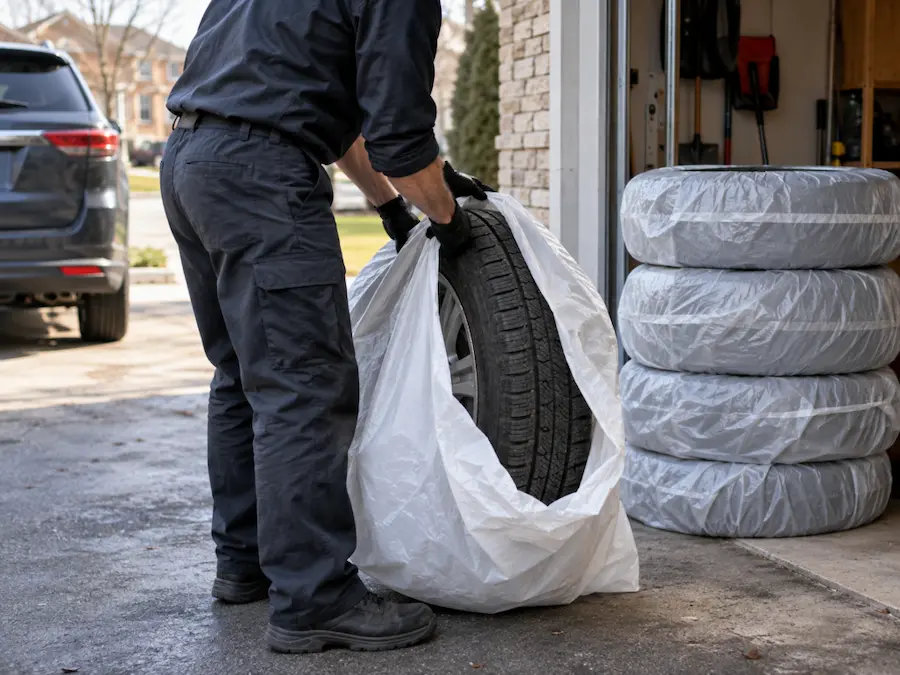
Bag each dry tire individually, pressing air out before sealing. This limits oxygen exposure, since oxygen draws natural oils out of rubber and speeds dry rot.
Step 4
Position tires by type: unmounted tires upright to avoid sidewall stress, mounted tires flat, hung, or upright without harm. Label each by position for consistent rotation later, and confirm the spot stays dark and off bare concrete.
When DIY Stops Being Sensible
Storing tires yourself works with basic space and a few tires. It stops making sense with heavy mounted wheels that are awkward to move alone, a space that can’t hold a stable temperature through a GTA summer or winter, or damage you’re not confident inspecting yourself.
What A Mississauga Professional Does Differently
A professional inspects tread depth, sidewall condition, and age before touching a tire, catching damage most drivers miss. Seasonal tire swaps get the same care — tires come off, get inspected, and go back on balanced, with the off-season set cleaned and positioned correctly instead of left in a corner.
Frequently Asked Questions – Tire Storage
How should you store tires when not in use?
Store tires in a cool, dry, dark space with stable humidity, away from sunlight and bare concrete. Clean and fully dry them first, then bag each individually to limit moisture and oxygen exposure, both of which accelerate rubber breakdown.
Can you store tires outside in a shed?
An outdoor shed usually isn’t ideal — temperature swings, humidity, and UV exposure through gaps degrade rubber faster than an indoor space. If it’s the only option, keep tires bagged and away from direct light.
Do tires need to be stored upright or flat?
Unmounted tires should stand upright to avoid sidewall stress, while mounted tires on rims can be safely stacked flat, hung, or stood upright without harm.
How long can winter tires sit in storage before they go bad?
Well-stored tires can last several seasons, but age matters regardless of use. Tires older than 6 years should be inspected before reinstalling, since rubber deteriorates over time even in good conditions.
About Fix My Tires
Fix My Tires provides mobile tire service across Mississauga and the GTA, handling flat repairs, new tire sales, and seasonal tire swaps at your location. Certified technicians bring shop-grade equipment to your driveway, office, or roadside.
Service Area
Fix My Tires serves Mississauga, including Streetsville, Erin Mills, Port Credit, and Malton, along with Brampton, Whitby, Oshawa, and the wider GTA.
Next Step
If your seasonal changeover is coming up, book a mobile tire swap and let a certified technician inspect, clean, and balance your off-season set before storage.
Call +1 (289) 401-8473 to schedule.